Showing posts with label Phones. Show all posts

Tuesday, January 29, 2019

Apple hints at lower iPhone prices as sales fall

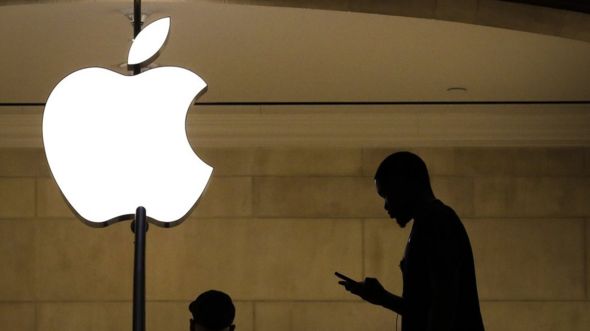
A man checks his phone in an Apple retail store in Grand Central Terminal, January 29, 2019 in New York City. Apple is set to report first-quarter earnings results after U.S. markets close on Tuesday.

Image copyrightGETTY IMAGES
Image captionThe global smartphone market is contracting
Apple boss Tim Cook has hinted it could lower iPhone prices in some places in an attempt to boost falling sales.
Revenue from the iPhone, responsible for most of the firm's profits, fell 15% in its latest financial quarter.
Overall the firm's revenue was down 5% from a year ago to about $84.3bn (£64.5bn).
The slowdown had been expected after the tech giant warned investors earlier this month that revenue would be about $84bn, lower than expected.
The firm had blamed the issues partly on an economic slowdown in China But chief executive Tim Cook said customers were are also struggling with the firm's high prices.
He said a strong dollar, which makes its products comparatively more expensive, has hurt its sales in emerging markets.
Mr Cook said the tech giant had started this month to re-pricing its phones to shield customers from the impact of currency fluctuations.
"What we have done in January in some locations and [for] some products is essentially absorb part or all of the foreign currency move as compared to last year."
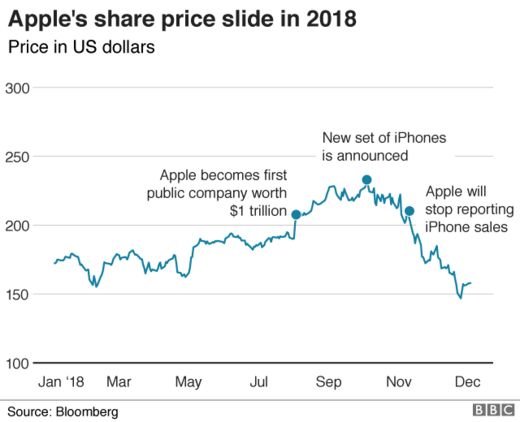
Apple share price
Still, executives said they expected the firm's challenges to continue.
Apple predicted revenue in the three months to 31 March of $55bn-$59bn - suggesting a drop of at least 3.4% year-on-year.
"The macroeconomic environment, particularly in emerging markets, will continue to be there," Luca Maestri, the firm's chief financial officer, said.
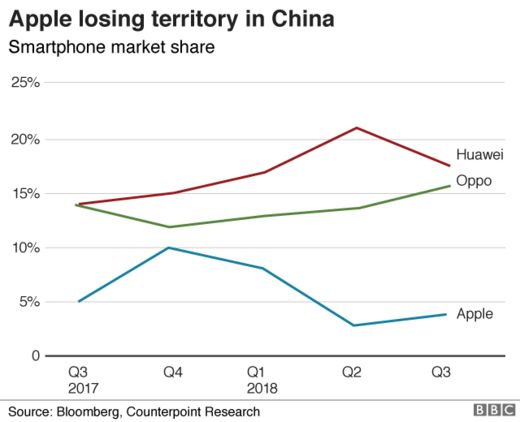
Apple marketshare in China
Apple's struggles are not unique. Global smart phone shipments contracted 5% in 2018, according to Canalys, a market analyst firm.
But the firm's share price has dropped by around one third since October, amid investor concerns that buyer appetite for iPhones is weakening.
Fears intensified after the firm said it would stop reporting the number of iPhones, iPads and Macs it sold each quarter.
However, Apple shares gained more than 4% in after-hours trade on Tuesday, as the firm proved more resilient than expected.
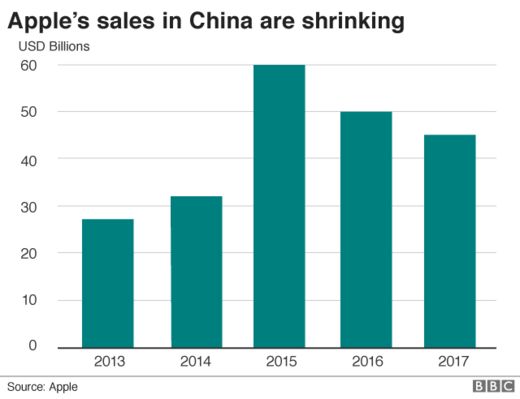
Apple sales in China
Quarterly sales revenue dropped by more than 25% in its Greater China region, which includes Hong Kong and Taiwan, compared to the year before.
Sales also slipped about 3% year-on-year in Europe.
But in the Americas - the firm's single biggest region - sales were up almost 5%.
Revenue from the services business also jumped 19% to a record $10.9bn in the quarter, which ended on the 31 December.

People use their phones outside an Apple store in Beijing, China January 7, 2019.Image copyrightREUTERS

Analysis - Dave Lee, BBC North America technology reporter, San Francisco

It's Apple's worst performing quarter for years, but that's not to say investors won't be mildly relieved.
After the firm's warning earlier this month that it would be posting earnings well below expectations for what is typically its blockbuster quarter, investors were well-prepared to see the drop in iPhone sales, and as a result, revenues overall.
That bad news was balanced out - perhaps even cancelled out - by the good news on services.
A big increase compared to this time last year - 19% - and a very healthy gross margin of 62.8%.
Apple is transitioning, slowly, into a different kind of company that isn't so reliant on hardware, and these numbers show that so far that transition is going well.
With $245bn in case on hand, it can afford to splash out and make investors even happier with a major acquisition or two in the entertainment space (but then, I've been saying that for a while now!).

Mr Cook said he remained confident in the business, pointing to strong sales of iPad and Macs, as well as growth in its services division, which includes Apple Pay.
Overall profit in the quarter fell less than 1% to $19.97bn.
"While it was disappointing to miss our revenue guidance, we manage Apple for the long term, and this quarter's results demonstrate that the underlying strength of our business runs deep and wide," he said.


Sunday, December 16, 2018

Huawei Honor View20 and Samsung A8s have hole-punch cameras

Huawei Honor View 20 handset

Image copyrightHUAWEI
Image captionThe Honor View20 was unveiled in Hong Kong

Two smartphone-makers have unveiled handsets featuring a "hole-punch" selfie camera.
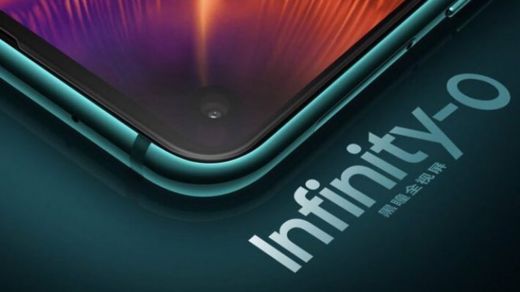
The screens of the Samsung A8s and Huawei Honor View20 both feature a small circular space for the component.
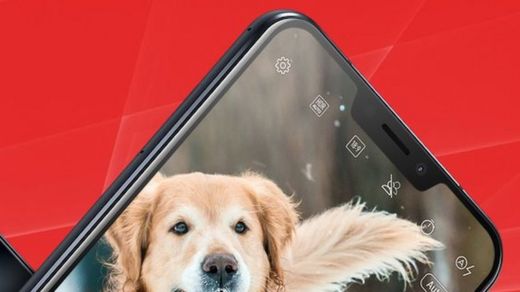
The design is intended to be less obtrusive than a "notch" - as popularised by Apple and later by many Android smartphone manufacturers.
One expert said the innovation highlighted how competitive the market for mid-range devices had become.

'World first'

Both Samsung and Huawei claimed to be first to launch the notchless camera design.
The Chinese company may have slightly edged out its rival by unveiling its device at an event in Hong Kong a few hours before Samsung's launch.
But the South Korean company had previously hinted at the screen-engineering feat by showing off a line drawing of the feature in November.

Samsung infinty-OImage copyrightSAMSUNG
Image captionSamsung's Infinity-O screen design features a hole-punch selfie camera

Neither handset features the kind of facial identification sensors that spurred Apple to introduce a notch in the first place.
One industry-watcher said the phones instead represented mid-range devices, which made them a good match for the new look.
"Huawei is relentless at using the Honor brand to really grab as much share in the marketplace as possible," said Ben Wood, from the consultancy CCS Insight,
"This is a very important part of the market, particularly for Samsung with the professional pressure it is facing from Huawei."
Samsung was the world's most successful smartphone brand in the July-to-September quarter, when it shipped 72.2 million units, according to research company IDC.
Huawei came second, according to the same report, with 52 million devices shipped over the same period.

AsusImage copyrightASUS
Image captionThe Asus ZenFone 5 features a typical notch design for its selfie camera

But both companies face challenges.
Samsung has lost substantial market share in the mid- and lower-tiers to Chinese rivals over the past year, while Huawei faces claims it broke US sanctions on Iran and poses a wider security threat to the West.
Huge camera
Huawei also claimed the Honor View20's main camera, on its rear, represents another world-first.
It offers a resolution of 48 megapixels and is the first to use of a sensor made by Sony that was announced in July.
The benefit is that users can crop in more closely into their photos without risking them looking pixellated when printed out. But the downside is that higher-resolution shots take up more storage space.
Xiaomi has also indicated it will soon launch a handset with the same sensor.
Samsung previously announced it had created its own 48MP sensor but has yet to reveal in which handset it will debut.

Tuesday, November 20, 2018

folding smartphones are not a dream anymore!

Infinity Flex Display: Samsung folding smartphone is here, a technology that was thought to be futuristic, is already here!

After weeks of spoilers, Infinity Flex display has finally been presented during the Samsung Developer Conference 2018
infinity flex display

A FIRST SIGHT

As you can see in the images, it’s a raw device, with thick layout and squared borders, but.. man it’s a folding device!
At a first sight it may seem a simple, outdated 7.3 inches tablet, but it is not.
You can easily fold it just like when you close your wallet and put it in your pocket jeans, and yes, it turns into a normal smartphone!
As announced by Samsung, this brand new device may run till 3 applications opened, at the same time. The display is made of two screens, and one of them is subdivided into other two parts.
The folding capability is given by a new plastic material used to build the screen. It gives the possibility to fold it over and over again, without noticing any signs of deformation.
Even though it is just a prototype, Samsung is fully convinced that it will be able to begin mass production within some months (and we believe them, it’s Samsung after all…)
If this AIO ( all in one ) device will be popular, the market of tablets will definitely go down. Who will be prone to buy just a tablet, when you can have also a handy smartphone?

TECHNICAL CONSIDERATIONS

Will it really be able to keep display consistency after thousands of opening-closing actions?
If all the components are located only in the bigger part, will they overheat?
Will the display show any signs of wear and tear, time passing by?
We will be able to answer these, and other questions only when it will be available in the market, so we can only wait (with a bit of hype) that moment!

Monday, November 19, 2018

iPhones are Allergic to Helium

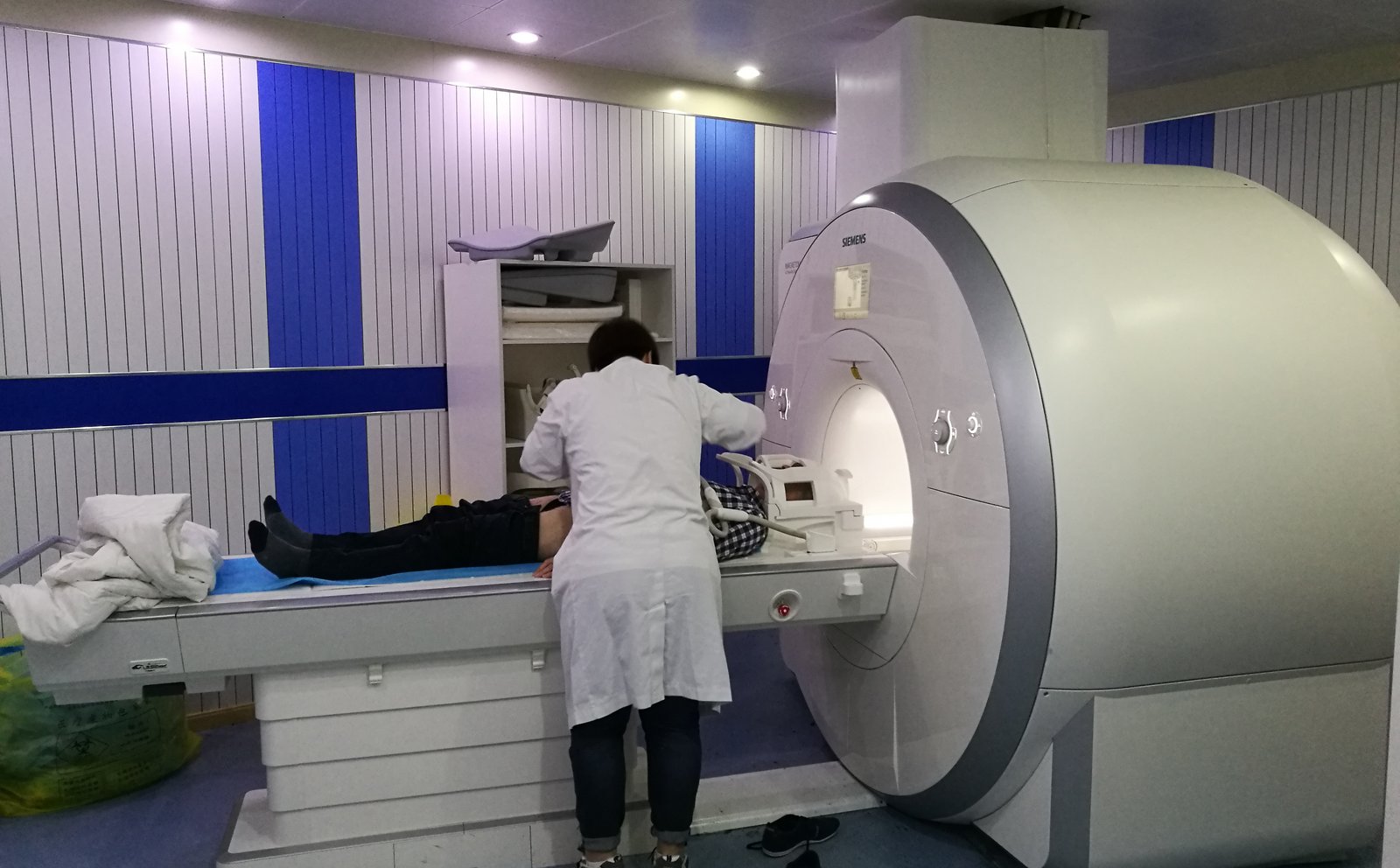
This is the kind of tale that you don’t hear every day. Erik Wooldridge is a Systems Specialist at Morris Hospital near Chicago. During the installation of a new GE Healthcare MRI machine, he started getting calls that cell phones weren’t working. Then, some Apple Watches started glitching.
“My immediate thought was that the MRI must have emitted some sort of EMP, in which case we could be in a lot of trouble.” But an electromagnetic pulse would have taken out medical equipment in the facility as well, and they were working fine! He started investigating, and learned that every single impacted device was made by Apple—the technician’s Android phones were fine. And it was a wide-sweeping issue, impacting 40 different devices. What the heck?
I’ve seen a lot of strange glitches in my time, and I’ve never heard of something like this. Neither had Erik. “The behavior of the devices was pretty odd. Most of them were completely dead. I plugged them in to the wall and had no indication that the device was charging. The other devices that were powering on seemed to have issues with the cellular radio. The wifi connection was consistent and fast, but cellular was very hit or miss.”
That’s when he posted the issue to Reddit, where other sysadmins speculated that it might be caused by the liquid helium used to cool the MRI machine. So he investigated, and found there was a helium leak at the same time that vented into the building.
“I discovered that the helium leakage occurred while the new magnet was being ramped [down to cool it]. Approximately 120 liters of liquid [helium] were vented over the course of 5 hours. There was a vent in place that was functioning, but there must have been a leak. The MRI room is not on an isolated HVAC loop, so it shares air with most or all of the facility. We do not know how much of the 120 liters ended up going outdoors and how much ended up inside. Helium expands about 750 times when it expands from a liquid to a gas, so that’s a lot of helium (90,000 L of gaseous He).” I bet the nurse’s voices were higher pitched that day!
The devices started to slowly recover after the initial incident, but not completely. “We did have a few abnormal devices. One iPhone had severe service issues after the incident, and some of the [Apple Watches] remained on, but the touch screens weren’t working (even after several days.)”
He performed some triage, categorizing devices by type. “Models of iPhones and Apple Watches afflicted were iPhone 6 and higher, and Apple Watch Series 0 and higher. There was only one iPhone 5 in the building that we know of and it was not impacted in any way. The question at the time was: What occurred that would only cause Apple devices to stop working?”
This piqued my interest, and I reached out to some friends that make ‘MEMS’ silicon. These microelectromechanical systems are some of the smallest mechanical apparatuses in the world. Every phone has gyroscopes and accelerometers with micrometer-thin elements. My initial theory, shared by some on Reddit, was that the helium molecules were small enough to get inside these vacuum-sealed chips and interfere with the mechanical workings.
But there are two problems with this idea: One, Apple isn’t alone in using MEMS gyroscopes—every phone has them. Why weren’t the Android phones affected? Perhaps there’s a bug in iOS that causes crashes when it gets faulty data from the gyro? But the bug impacted Apple Watches, too—and they run WatchOS. Additionally, iPhones earlier than the 6 weren’t affected. It seems unlikely that this was a new software bug that impacted both iOS and WatchOS.

Inside a MEMS gyroscope, from our iPhone 4 Gyro Teardown.
So what else could it be? Well, at the heart of every electronic device is a clock. Traditionally, these are quartz oscillators, crystals that vibrate at a specific predictable frequency—generally 32 kHz. When they were first invented, they enabled the first digital ‘quartz’ watches. Now, these frequency generators are at the heart of every electronic device.
Without a clock, the system stands still. The CPU flat out doesn’t work. The clock is literally the heartbeat of a modern device.
But quartz oscillators have some problems. They don’t keep time as well at high (and low) temperatures, and they’re a relatively large component—1×3 mm or so. In their quest for smaller and smaller hardware, Apple has recently started using MEMS timing oscillators from a specialized company called SiTime to replace quartz components.

A MEMS oscillator, as seen through an electron microscope.
Specifically, they’re using the SiT512, ‘the world’s smallest, lowest power 32 kHz oscillator.’ And if the MEMS device was susceptible to helium intrusion, that could be our culprit!
A failing oscillator would match Erik’s symptoms, which he reproduced in an experiment. “I placed an iPhone 8 Plus in a sealed bag and filled it with helium. This wasn’t incredibly realistic, as the original iPhones would have been exposed to a much lower concentration, but it still supports the idea that helium can disable the device. In the video I leave the display on and running a stopwatch for the duration of the test. Around 8 minutes and 20 seconds in the phone locks up. Nothing crazy really happens. The clock just stops, and nothing else. The display did stay on though.”
I was able to repeat his experiment in our lab. My iPhone 8 lasted about four minutes in a helium atmosphere before it shut off entirely.
Sure enough, Apple’s user guide for the iPhone and Apple watch admits this is a problem:
“Exposing iPhone to environments having high concentrations of industrial chemicals, including near evaporating liquified gasses such as helium, may damage or impair iPhone functionality. … If your device has been affected and shows signs of not powering on, the device can typically be recovered.  Leave the unit unconnected from a charging cable and let it air out for approximately one week. The helium must fully dissipate from the device, and the device battery should fully discharge in the process.  After a week, plug your device directly into a power adapter and let it charge for up to one hour.  Then the device can be turned on again.” (Emphasis added.)
Hydrogen and helium are notoriously hard to contain because their molecules are so small. It sounds like this is a problem that SiTime has been working to solve for a while. I found this on their FAQ, “How effective is the hermetic seal of MEMS oscillators?”
Previous generations of EpiSeal resonators may have been impacted by large concentrations of small-molecule gas. Newer EpiSeal resonators are impervious to all small-molecule gases. Please contact SiTime in case you are planning to use a SiTime device in large concentrations of small-molecule gas, so that we can recommend an appropriate, immune part.” (Emphasis added again.)
I was curious if this would impact other kinds of MEMS devices, so I reached out to InvenSense Motion, the company who makes the image stabilizing chip in the Pixel 3. David Almoslino, their Senior Director of Corporate Marketing, confirmed that it was an issue. He told me that their products “can be somewhat susceptible to helium. Helium can diffuse through the fusion bond oxide and cause the cavity pressure to increase. In our pressure sensors, helium could cause the absolute accuracy to temporarily degrade. In our gyro sensors, helium could cause the offset to drift and could cause the oscillation to temporarily stop. In any [accelerometer] sensors, helium should have very little impact. All our InvenSense parts should recover once removed from any helium environment.”
Of course, the reason that you’ve never heard of this before is because it’s such a rare situation. But silicon manufacturers are aware of it and do what they can to minimize the problem. David told me that “A helium leak test is a pretty standard MEMS test done by most companies to assess vacuum packages.”
So that’s it! Like an incredibly tiny grain of sand, the helium molecules are small enough to get inside the device, physically stop the clock, and turn your phone temporarily into a paperweight.

The iPhone XR is the iPhone 9 we never had

The iPhone XR is the iPhone 9 we never had

If you’re wondering what happened to the iPhone 9, we found it: It’s dressed up as the iPhone XRInside the XR's brawny new bezel, we found an old-school rectangular battery, a modular SIM tray, and... 

iPhone XR in motion
If you’d rather watch than read on this lazy Halloween, here’s the sped-up video version of our teardown.

XR-cise your iPhone XR

What lies beneath that Liquid Retina display? Get a good look at the iPhone XR's guts with these free teardown wallpapers.

Feds issue sweeping Right to Repair reforms

The Copyright Office has spoken: Consumers now have permission to break DRM and software locks in the name of repair. This is a huge victory for the Right to Repair movement.
Fact: iPhones are allergic to helium 
This is not a trick—our CEO tells the tale of how an MRI machine knocked out a bunch of iPhones! 

Contact Form

Name

Email *

Message *